Rhinoplasty: Who Needs It and How Is It Performed?
The face is the first area that stands out in the human body. Defects found in or developing in the facial region directly affect a person's psychology. For this reason, correcting these defects is very important for…
Rhinoplasty
The face is the first area that stands out in the human body. Defects found in or developing in the facial region directly affect a person's psychology. For this reason, correcting these defects is very important for the individual.
Advances in the field of medicine in Turkey have also led to developments in technology. With this technology, nasal surgeries that were previously considered difficult are now much easier to perform.
Rhinoplasty, known as nasal aesthetics, is an operation aimed at making people feel better both aesthetically and health-wise. Thanks to this operation, a person can have a healthier nose while also gaining the opportunity to achieve a more aesthetic appearance.
What is Nasal Aesthetics?
The nose is one of the most important organs in the human face. Shape deformities in the nasal region also cause changes in a person's facial expression. In tip rhinoplasty, the procedure is performed only on the soft tissue and cartilage at the tip without touching the bony structure of the nose.
These procedures are needed due to deformities in the nose. These deformities include:
- The nasal tip being too wide,
- The nasal tip appearing compressed,
- The person's nostrils not having a certain symmetrical structure,
- Drooping, raising, or pointed shape at the nasal tip.
Due to these deformities, a person may request nasal tip aesthetics. This surgery is easier compared to rhinoplasty. Although the surgical process varies from person to person, it typically takes an average of 30-60 minutes. After necessary checks are provided on the same day, the patient is discharged and sent home.
Rhinoplasty Before and After
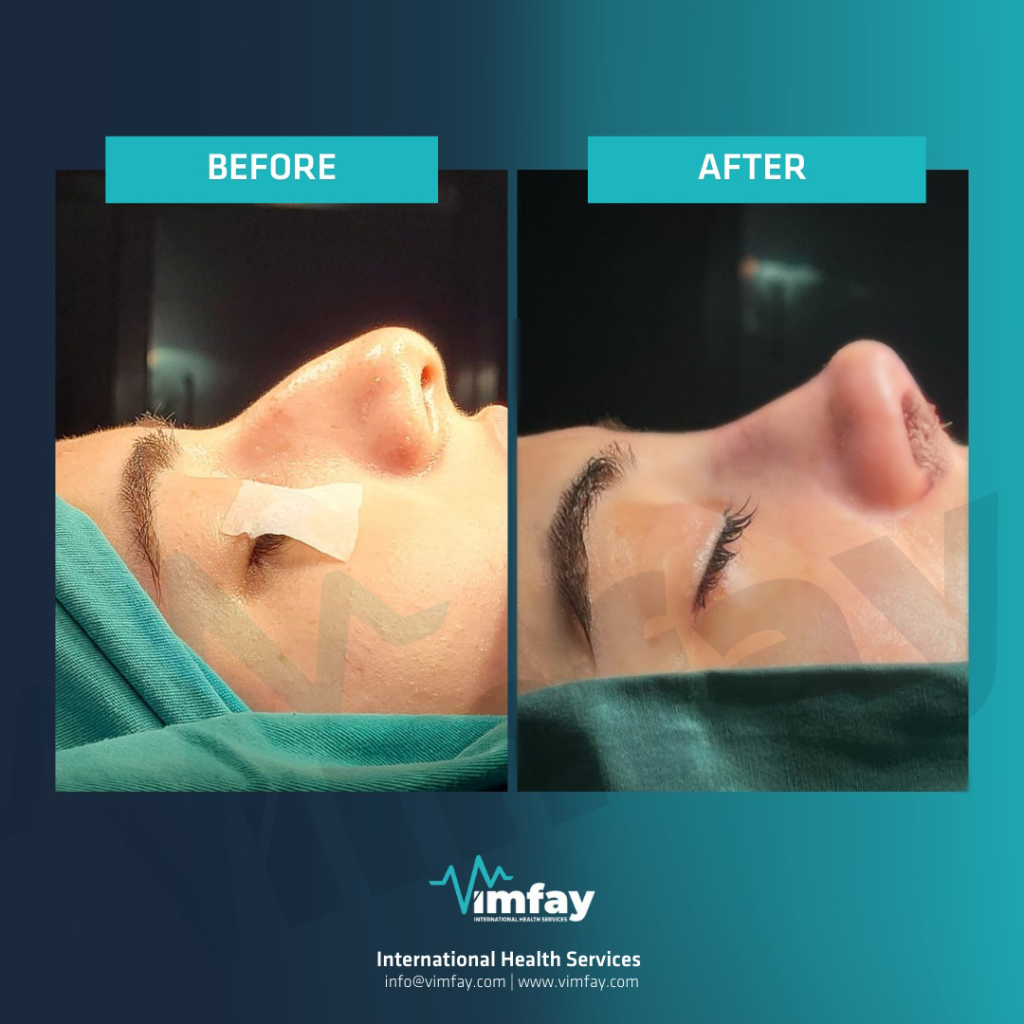
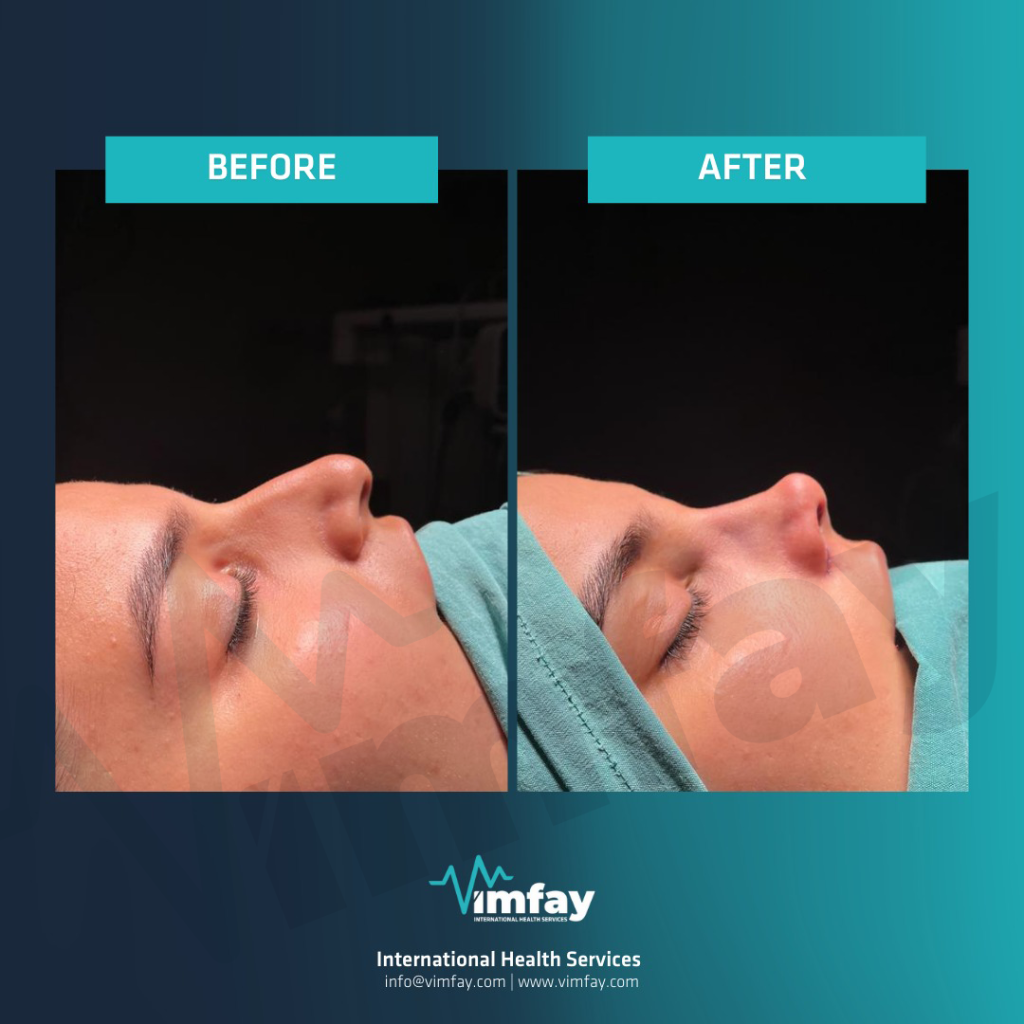
Why is Nasal Aesthetics Performed?
Nasal aesthetics can be performed for serious health problems or aesthetic appearance purposes. Among health problems, difficulty in breathing quality due to shape deformity can be mentioned.
From an aesthetic perspective, the reason can be that a person dislikes their nose and wants a nose more proportionate to their face.
- The bone part of the nose being crooked or arched,
- The nose having a clearly visible deformity,
- Having an excessively large nose are personal reasons for which a person may want nasal aesthetics.
At What Age is Nasal Aesthetics Performed?
Due to changing fashion trends in our time, the age at which people undergo aesthetic procedures has dropped to quite a young age. However, people who want aesthetic surgery should wait until 18-19 years of age so that the underdeveloped bone structure can complete its growth.
While people wanting nasal aesthetics are expected to reach a certain age, this does not apply to younger patients who must undergo surgery due to health problems. With doctor's supervision and approval, rhinoplasty surgery can be performed on younger children who experience personal health problems due to their nose.
How is Nasal Surgery Performed?
Before the surgery, a consultation should be held between the person undergoing nasal surgery and the doctor during the pre-operative examination. The reason for the surgery should be discussed—whether it will be for health reasons or aesthetic purposes.
If it is for aesthetic purposes, necessary examinations should be initiated and required information should be provided to the patient. Before the surgery, discussions are held about what the nose will look like and plans are made. The patient's medical history is reviewed and medications used are discussed. If the patient is taking blood thinners, these must be discontinued during the pre-operative period.
Before the surgery, the person is put through certain tests to prepare for the operation. Nasal surgery, performed in two ways—open and closed—typically takes an average of 2-3 hours. This duration varies depending on the patient, the nose structure, the shape of the new nose to be created, and any complications that may occur in the operating room.
Incisions are made from inside and at the tip of the nose, and corrections are made to the bone and cartilage structures within. After surgery, all patients experience facial swelling. These swellings disappear 10-15 days after the surgery date.
How Should One Prepare for Nasal Aesthetics Surgery?
- From the moment the decision to undergo surgery is made, one must maintain contact with a specialist doctor.
- Before nasal surgery performed due to aesthetic concerns, the shape of the nose is decided together with the doctor.
- For 14 days before surgery, if you are taking blood thinners, you must discontinue them.
- Since it positively affects the healing process, you can take vitamins after consulting with your doctor.
- If you actively wear glasses, you should consult with your eye doctor about contact lenses since you won't be able to wear glasses for some time after surgery.
- Since general anesthesia will be used in your operation, you must go to the hospital with a person who can stay with you for one day.
- Facial cleansing should be performed the night before surgery.
- Nothing should be eaten or drunk after midnight on the night before surgery.
- Your face must be thoroughly cleaned, and you should not use external products such as creams or makeup.
Non-Surgical Nasal Aesthetics (Liquid Rhinoplasty): What is it?
In cases where the deformity in the nose is not serious, a non-surgical nasal aesthetics method is applied. With this method, filler is injected into the bridge of the nose. This way, your nose and face can achieve a new shape and expression.
Who Cannot Undergo Nasal Aesthetics?
Although anyone requesting nasal aesthetics can ask for it, not everyone can have it. This decision is made by doctors after examination. Like all surgeries, nasal surgery carries certain risks. These risks are shared with the patient, and if there are conditions to prevent the procedure, a decision against surgery is made.
- People with diabetes,
- People with hypertension (high blood pressure),
- People with diseases that can cause bleeding disorders,
- People with heart disease,
- People with Body Dysmorphic Disorder,
- People with Obstructive Sleep Apnea cannot undergo aesthetic nasal surgery with doctors' consent.
How Many Days Does It Take to Recover After Nasal Surgery?
Nasal surgery is an important procedure performed under general anesthesia that carries the risk of serious complications during surgery. The recovery of people who undergo nasal surgery for various reasons progresses over a certain period. These can be listed as follows:
Every surgery and illness varies from person to person. For this reason, the following timeframes are based on averages.
- After surgery, patients can get up and walk around within 4-6 hours.
- After approximately 6 hours, if the patient does not have active nausea and vomiting complaints, they can eat.
- Some patients stay in the hospital for the same day while others stay for 1 day and are discharged the next day.
- Tampons placed in the nose by the doctor are removed after approximately 1-2 days, while the splint placed on the dorsum of the nose is removed on average after 1 week.
- If the patient has no complaints, they can return to work after 7-10 days.
- Bruising and swelling improve to a certain extent on average between 7-10 days.
- Facial edema can develop after surgery. This edema is notably reduced after approximately 1 month.
- The patient fully recovers after 1 year.
Things to Pay Attention to After Nasal Surgery
Like all surgeries, pain is normal after this procedure and painkillers can be used on the doctor's advice. During this period, all of the doctor's recommendations must be followed.
Situations such as dizziness and blurred vision that may occur when standing up are normal, but you should get help from someone when standing up.
Bleeding in the nose can cause nausea and vomiting. If the patient has no nausea or vomiting complaints after surgery, they can drink water. You should wait 6 hours before drinking water. Again, after 6 hours, if there are no complaints of vomiting or nausea, you can slowly consume watery foods such as soup and yogurt drinks.
For a few days after surgery, liquid foods should be consumed. To prevent bleeding, the pillow should be high when lying down. For 15 days after surgery, actions such as water aspiration and sniffing should not be done in the nose. Feeling of congestion is normal.
To prevent the given shape from being deformed, you may need to discontinue glasses use for a period.
- Running, swimming, strong chewing, laughing in a way that uses all the muscles of the face, and vigorous tooth brushing should be avoided.
Nasal Aesthetics (Rhinoplasty) Prices in Turkey
Just as in the treatment of all serious illnesses, aesthetically performed treatments are also preferred in Turkey. Especially with advancing technology in the field of medicine and the experience of doctors performing treatment, it is increasingly preferred by foreigners.
The high success rate of surgeries performed in Turkey, the experience and expertise of doctors, and the friendly demeanor of all service personnel are among the reasons for preference.
Nasal surgery prices in Turkey are a topic of interest to everyone. However, since this pricing varies depending on the patient's condition, treatment process, and treatment methods to be used, it is not possible to give a definitive price.
If you would also like to be informed about nasal surgery in Turkey, please contact us.
Medical Information.This content has been prepared by the Vimfay content team with contributions from physicians who are experts in their field. All content on the site is for general informational purposes only and does not constitute medical advice. Vimfay is an intermediary organization; it does not provide diagnosis or treatment services. Please consult a physician for evaluation, diagnosis, and treatment regarding your complaint.
Let's plan the process together
Share your complaint in your own language; our team will get back to you.
Free Pre-AssessmentReviews
Be the first to write a review.